


"You are what you eat" And your dog is ...what you feed him... Just like hoomans, dogs need nutritious and wholesome food to survive and thrive. The healthier you feed your pet, the longer and happier life they'll have and you will have. (as there is more time to be together) At Cooka's we believe in healthy and honest food. Dogs are our family members, our children and there is no excuse for feeding low-grade foods that are made from questionable products. But yes, we know that navigating the confusing and often misleading ingredient list of a pet food or snack can be a difficult task. It's a bit like playing Sherlock Holmes to find the truth.
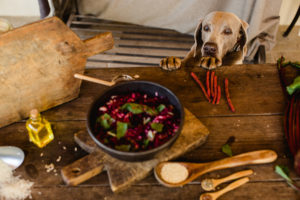
Here are our simplified clues Clue 1 - Strange names This one is simple - If you cannot pronounce an ingredient, it should not be in the food. Neither in your food and neither in our pet's food! Clue 2 - Colours We as pawrents are enchanted by happy and bright colours, but dogs are actually colourblind so all this effort of adding colours is for the hooman benefit only. It has long been known that adding artificial colouring to food can have a serious negative effect on our children's behaviour. The symptoms of ADHD (attention deficit hyperactivity disorder) can be observed in dogs, including hyperactivity and a reduction in attention span. Often listed as 'E' numbers (but most of the time not mentioned at all) these colourings are mostly made from petroleum by-products and which take years to breakdown in the environment. So when you are buying something colourful, always check where the tint comes from. At Cooka's we only bake with natural colouring options, provided by mother nature. Green/blue comes from algae like spirulina, red from beetroot, yellow from turmeric and a chocolate brown from carob.

Clue 3 - Preservatives Preservatives are added to dog food to increase its shelf life and hence the profitability of the company producing it. Artificial preservatives are a particularly nasty set of additives that can cause a number of health problems. The main artificial preservatives you might see are E320 (BHA), E324 (Ethoxyquin), E321 (BHT), E202 (Potassium Sorbate) and E310 (Propyl Gallate). 1. Ethoxyquin –This common preservative has two questionable uses. It’s a pesticide used by pear farmers. It’s also used as a hardening agent for rubber and has been linked to a number of worrisome health concerns. 2. Propylene glycol – This is an ingredient in antifreeze and it’s often used to keep semi-moist kibble from drying out. It has been removed from cat foods but still exists in many dog foods. 3. E320 - Butylated hydroxyanisole (BHA) – For years it’s been a common preservative in pet foods. However, it’s now banned in some areas because it’s now recognized as a possible carcinogen. 4. E321 - Butylated hydroxytoluene (BHT) – Also used as a common preservative. It’s also found in cosmetics and even jet fuel – Yuck! The World Health Organization has acknowledged both of these as suspicious and potential carcinogens. 5. E 310 - Propyl Gallate – Used to stabilize cosmetics and food packaging, it’s connected to liver diseases and cancer. Maltodextrin is another preservative often used as a thickener or filler. It’s an artificially produced white powder which can can cause spikes in your dogs blood sugar, change the composition of the gut bacteria by suppressing the growth of probiotics, cause gastrointestinal symptoms, such as gas and diarrhea, allergic reactions and even cancer. The most common source of Maltodextrin is corn, a plant most often genetically modified (GMOs). GMO foods have been linked to countless of health issues, including Alzheimer’s (yes, even dogs can get it), kidney damage, antibiotic resistance, reproduction disorders, allergies and cancer. Clue 4 - Leavening agents (things that make dough rise) Can dogs eat yeast? The answer is NO. Yeast is highly toxic to dogs, and the ingestion of it can lead to life threatening complications. When your dog eats yeast there’s two major health concerns you need to worry about — bloat & alcohol poisoning. Yeast rises in warm & moist environments, so when a dog ingests food made with yeast it causes their stomach to expand. That increase in size and pressure can lead to painful bloat (aka GDV), a rapidly progressive life threatening condition. Munching foods made with yeast can also cause alcohol poisoning. Yeast produces ethanol during fermentation in uncooked dough, and that ethanol can get absorbed quickly into the bloodstream of dogs. Complications from alcohol poisoning include tremors, disorientation, hypothermia, hypoglycaemia, and respiratory depression. Baking soda and baking powder are two other leavening agents commonly used in commercial feed and treats. Baking soda is simply sodium bicarbonate. Baking powder consists of baking soda and an acid, usually cream of tartar, calcium acid phosphate, sodium aluminum sulfate or a mixture of the three. Ingestion of large amounts of baking soda or baking powder can lead to electrolyte abnormalities (low potassium, low calcium and/or high sodium), congestive heart failure or muscle spasms. BUT - there is one yeast very beneficial to us and the kids. Nutritional yeast, also known as Brewer's yeast. It is made from a single-celled organism, Saccharomyces Cerevisiae, which is grown on molasses and then harvested, washed, and dried with heat to kill or “deactivate” it. Because it's inactive, it doesn't froth or grow like baking yeast does, so it has no leavening ability. Brewer's yeast is also high in selenium, potassium, chromium, iron, zinc, and magnesium and B-Vitamins. Highly nutritious and super yummy, as the taste reminds a bit of cheese. At Cooka's we like to sprinkle it on our home-made meals and the kids just adore it. Simply put, there is no need for leavening agents in the food of our fur-families.

Clue 5 - MEAT Wait a second, you may wonder why this is here. Isn't meat the most important ingredient? YES, it is. But most pet foods do not contain real meat. Most foods are made from meat 'meals', which is a sort of animal flour made from a process called rendering. Meal is actually a mixture of the non-muscle meat portions of the animals, which include internal organs, skin, hooves, feathers, and other parts. Meals can be also made from animals that have been sick, as the high temperature process destroys any bacterial count (and most nutritional value - that's why we find find so many vitamins and minerals added to pet food). Other foods might contain no meat at all and just the essence of meat. What is an essence you may wonder? An essence is like a perfume, which smells just like meat, but it isn't. Yet, the chemical reaction in the brain of our pets indicates MEAT once they get a 'whiff' of it. At Cooka's we only use REAL MEAT in HUMAN GRADE quality. CLUE 6 - Price Real food cannot be cheap. Neither for us nor for our fur-kids. Obviously not everyone can afford the most expensive pet-food, but we can navigate around the aisle, we can check online and choose to buy bigger quantities, which automatically will drop the cost. And yes, we can also make a few meals from scratch and it is by far less expensive than most people believe. Supermarkets have constantly promotions, the perfect time to stock up on meat and fill the freezer. Add a little rice, some doggie-approved vegetables and a little olive or coconut oil and your friend will be wagging with joy. With Love, Cooka

PS: Just like hoomans, dogs need nutritious and wholesome food to survive and thrive. The healthier you feed your pet, the longer and happier life they'll have and you will have. (as there is more time to be together)


Do you want a discount?

Join our newsletter for tail-wagging news, purr-fect updates, and exclusive treats just for you!
Related Posts

Valentine's and that secret ingredient called LOVE
Valentine’s Day for Our Pets, If you are anything like us here...

Celebrating Day of Colours
Dogs and their different fur colours Dog fur can come in so many...

The Moon Cycle
The mysterious power of the Moon. We are all aware of the moon’s...

Autumn
AUTUMN is here, and it brings so much joy to my mind. The...