


I am not sure you know this...but at Cooka's we LOVE Africa and African wildlife. Especially elephants, as our Weimis believe they are part of their family, grey and big ears, you know... And yes, I promised, one day that we will take the kids on a safari, watching all these beautiful animals in the wild... One day, we can dream, right? So when we read this story our hearts jumped and the tails went into a crazy wag-mode. Poachers in Africa, who are now armed with military-style weapons and even helicopters to hunt their prey, have a new adversary: dogs with a nose for detection. Deployed in key locations across six African countries are now over 50 detector dogs. Yes, dogs! THE POACHERS PAWTROL IS HERE! These little fur-friends have sniffed out contraband - elephant tusks, rhino horns and pangolin scales - leading to hundreds of arrests of traffickers and disrupting the smuggling routes.
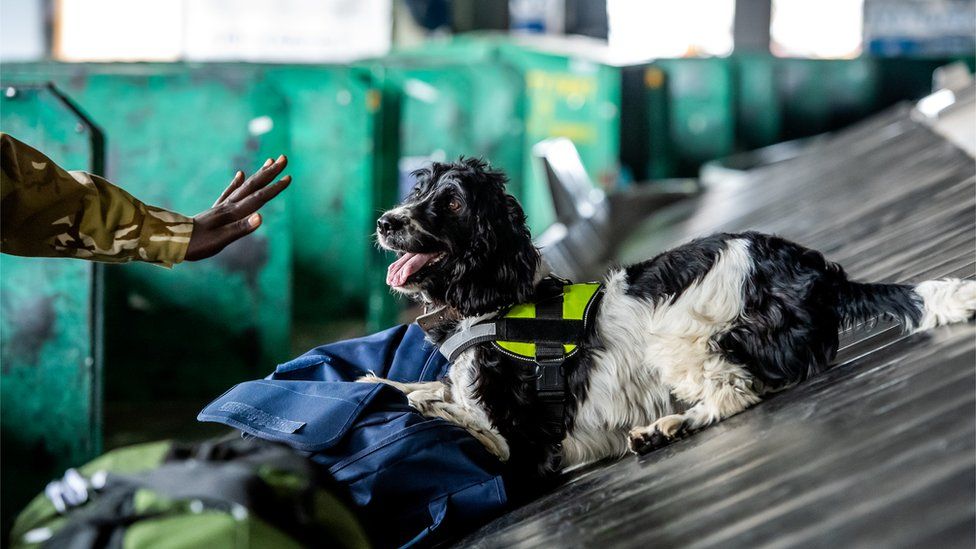
There have been already over 400 seizures of illegal wildlife products since the programme, funded by the African Wildlife Foundation has started in 2011. Will Powell, the director of 'Canines for Conservation', says it is a public-private partnership with governments that helps them develop dog units with their wildlife organisations.This also includes strategy, standard operating procedures and veterinary protocol. With their help we select rangers and train them as detection dog handlers. Dog handling has now actually become a sought-after job among employees of wildlife authorities in Tanzania, Kenya, Uganda, Mozambique, Botswana and Cameroon. Handlers are carefully matched with their furry 'pawtner', which is important as some rangers have not even been around dogs before. Most of the dogs come in from Europe, countries where there is a culture of working dogs like the Netherlands, Germany, the Czech Republic and Hungary. The team looks especially for open, confident, level-headed dogs able to deal with distraction and constant travelling," says Mr Powell, who is a British citizen, who started his career training dogs to detect landmines.
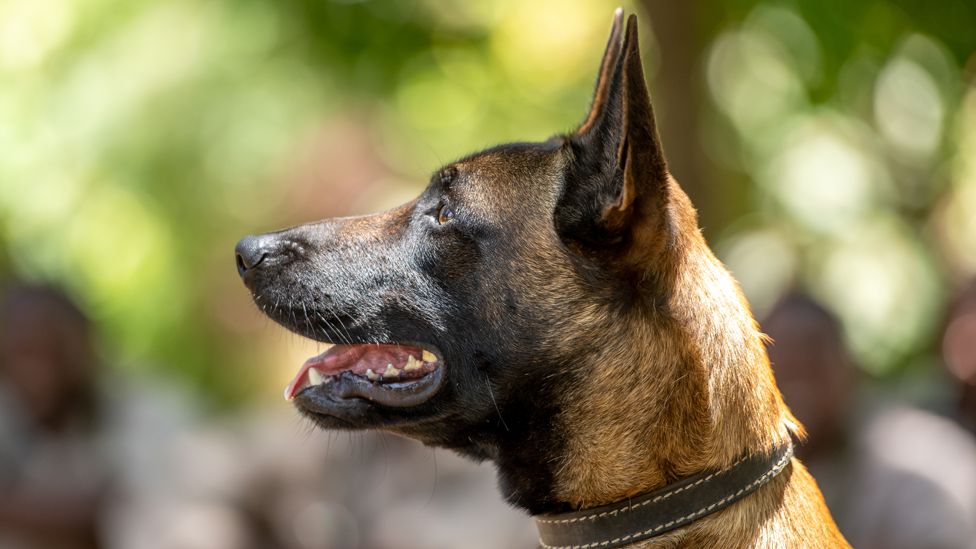
Two breeds excel as detector dogs: Malinois and springer spaniels. Malinois, which are Belgian shepherds, are famously intelligent, tough and can cope with heat, while the springer spaniels have good noses and a friendly nature. But springers have also another important advantage - there is often a fear of dogs and shepherds with pointy ears are regarded as scary while floppy ears, like on a spaniel is mostly considered cute. So spaniels are best used around areas with many people. The working life of the dog depends on the breed. For the Malinois, that can be around 12 to 13 years and when they are ready to retire the organisation finds them a loving home to spend the rest of their lives. The teaching of the dogs usually starts by detecting ivory as it's the hardest smell to detect. Rhino horn and pangolin scales are easier to pick up and the dogs even learn to detect lion bones and teeth, which are trafficked for Chinese medicine now that tigers have almost been wiped out.

In the field the dogs have found ivory and rhino horn concealed in coffee and chillies, as well as wrapped in layers of foil and plastic. They've even found a lion's tooth hidden in a thermos! When dogs find something they are usually rewarded with a treat or their toys. Traffickers now know that detector dogs are checking international flights and just to understand the success of the program, the seizures of illegal products went from 51 down to just a handful in 2019. Canines for Conservation have what they call the "Five Freedoms" at the heart of the dogs' welfare:
1. Freedom from hunger and thirst 2. Freedom from discomfort 3. Freedom from pain, injury or disease 4. Freedom to express normal behaviour 5. Freedom from fear and distress

THANK YOU 'Canines for Conservation' for your pawsome work WE WOOF YOU
Photo Credits: Paul Joynson-Hicks







Do you want a discount?

Join our newsletter for tail-wagging news, purr-fect updates, and exclusive treats just for you!
Related Posts

Valentine's and that secret ingredient called LOVE
Valentine’s Day for Our Pets, If you are anything like us here...

Celebrating Day of Colours
Dogs and their different fur colours Dog fur can come in so many...

The Moon Cycle
The mysterious power of the Moon. We are all aware of the moon’s...

Autumn
AUTUMN is here, and it brings so much joy to my mind. The...